Why conservas?
Because the best thing in your kitchen doesn't need a fridge, a recipe, or a reservation.
↓ Read the argumentBefore tins, there was salt, smoke, sun and oil.

For centuries, coastal communities found ways to make the catch last a little longer. Then, at the beginning of the 19th century, everything changed. French inventor Nicolas Appert discovered that food could be preserved by heating it inside an airtight container. Soon after, metal tins entered the picture, and a whole new way of eating was born.
Sardines were one of its earliest stars.
In the 1820s, producers around Nantes began packing sardines in oil and sealing them in tins. The idea travelled quickly along the European coast. From France to Galicia and Portugal, small fishing towns became home to canneries, generations of craftsmanship and some seriously beautiful little tins.
What started as a way of making fish last became something much bigger: a Mediterranean ritual, a pantry essential and, eventually, a delicacy in its own right.
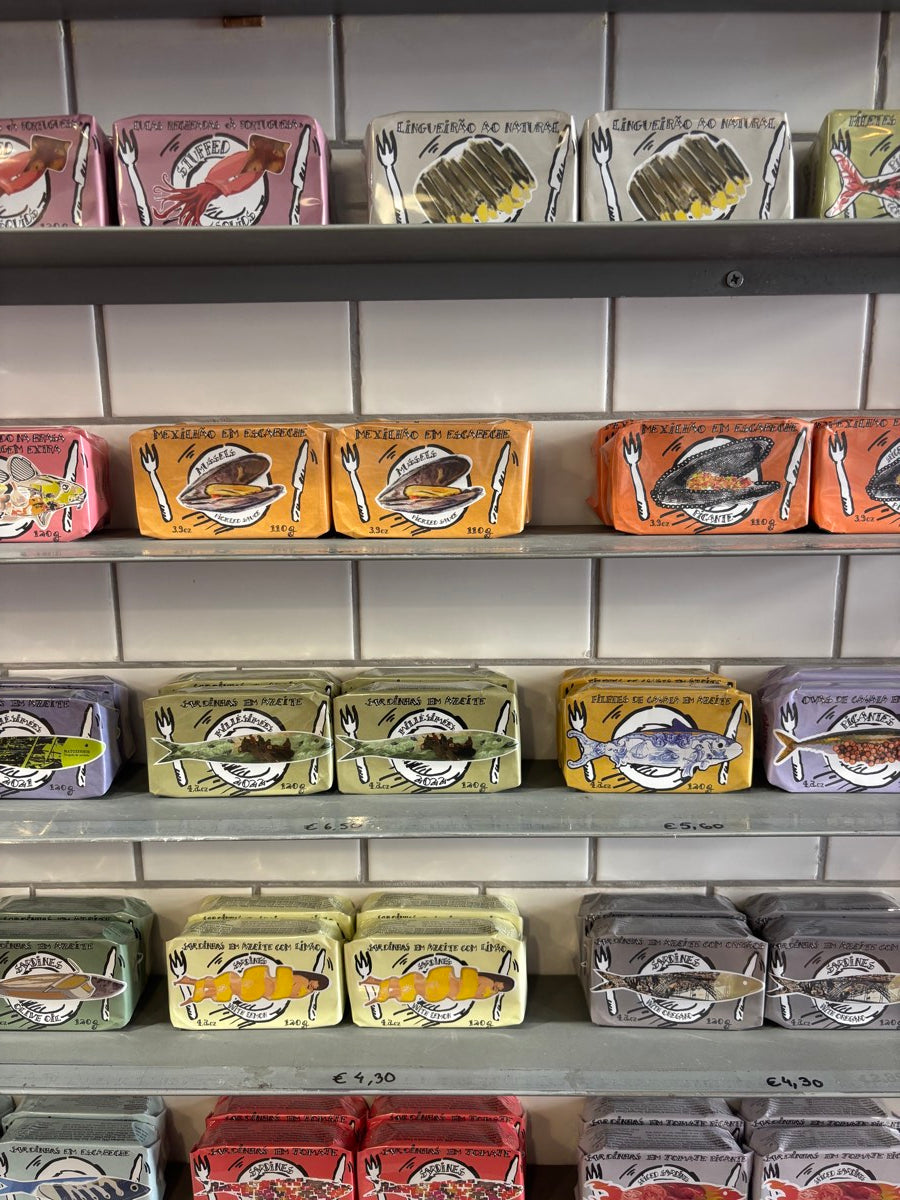
Real moments from the canneries, shops and tables that turned us into conservas obsessives.